

As previously mentioned at Link2Brazil, polls for the upcoming presidential elections in October are appearing in rapid succession. They point to a concerning conclusion: the high disapproval rating of the current government, specifically President Lula. This public dissatisfaction threatens a potential re-election, despite positive management figures such as the lowest unemployment rate in history and rising middle-class incomes. It goes without saying that Lula is finding this criticism of his policies hard to swallow. After discussing the situation with his advisors and allies, he reached the following conclusion: the voters’ sour mood is due to their heavy debt burden, which has reached record heights.
The number of families no longer able to pay their bills is enormous. For them, low unemployment and rising incomes are insufficient. The government is now intervening, largely with an eye on the elections, by launching a package of emergency measures to fill the gap in the debtors’ pockets.
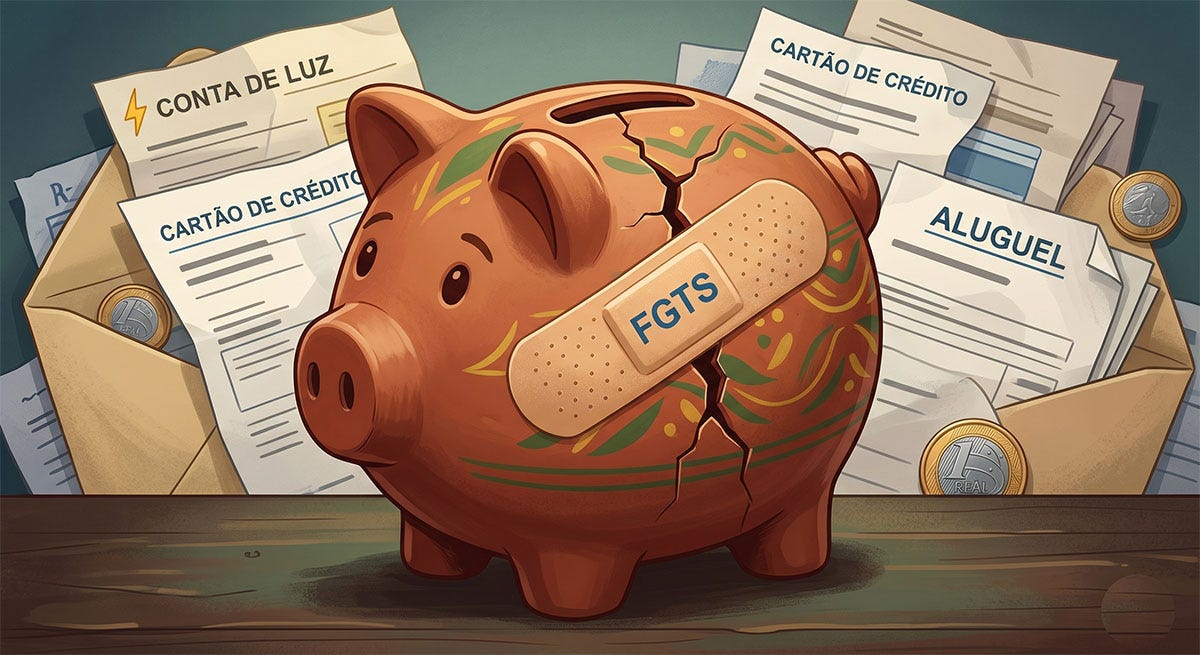
The central mechanism of this new proposal is the use of funds from the FGTS (Severance Indemnity Fund). This fund was originally intended as a mandatory savings pot for workers, accessible only in cases of unfair dismissal or for purchasing a home. The government now intends to tap into these reserves to settle debts. This represents a dangerous form of financial engineering that only addresses short-term symptoms while undermining the long-term financial security of workers.
There are several reasons for this. First, interest rates in Brazil remain extremely high. Furthermore, inflation has stayed above the 3% target for the past three years, eroding the population’s purchasing power. Additionally, the government refuses to cut public spending. This lack of fiscal discipline drives up national debt and keeps interest rates for personal loans at unaffordable levels. A previous program with the same objective, “Desenrola Brasil” in 2023, failed to produce the desired results; the number of defaulters simply continued to rise.
A comparison with other emerging economies shows that household debt in Mexico and Turkey stands at 17% and 10% of GDP, respectively. In Brazil, this figure has climbed to a staggering 35%. This situation constitutes a “perfect storm.” Although unemployment is low, many new jobs are precarious and offer little financial stability. The rise of fintechs and the digitalization of credit make it too easy to take out loans from the comfort of one’s own home. Furthermore, gambling via apps, known as “bets,” can also be cited as a factor worsening the financial situation of families.
Currently, approximately 29% of the income of Brazilian families is reserved for debt repayment. This is the highest level ever recorded by the Central Bank. Consequently, any small wage increase is immediately swallowed up by overdue payments. Without fundamental reforms in government management and the credit market, these types of measures are merely band-aids on a deep wound. They are designed to win over voters without making the economy truly healthier. There are people using multiple credit cards simultaneously just to get by, trapped in a spiral of interest on interest. For many families, the daily choice is either paying current living expenses or settling old debts.
According to economists, while the measure might allow people to pay off their debts temporarily, there is a strong possibility they will immediately fall back into debt. After all, their disposable income is not permanently increasing, and the cost of credit remains high. The government is opting for a quick, visible solution that appeals to voters in the short term, but these temporary interventions do not strengthen the Brazilian economy in the long run. Without a fundamental change in how the government manages credit and spending, the debt problem will not truly disappear.
Bets

A recent study commissioned by the IBJR (Instituto Brasileiro do Jogo Responsável) indicates that Brazilians now spend as much on online betting (bets) as they do on alcoholic beverages. This suggests that, in an extremely short period, gambling has secured a permanent place in the monthly budget of the average Brazilian.
This finding underscores how deeply these so-called ‘bets’ have become rooted in the daily lives and monthly expenses of the population. This does not involve the use of extra disposable income, but rather a process of displacement. Money that was previously spent on other forms of leisure, clothing, or even basic necessities is now flowing directly to gambling platforms.
This shift intensifies the financial pressure on low-income groups and the middle class, who already lose a significant portion of their wages to fixed costs and debt repayments. Because access to these bets via smartphones is virtually seamless, it represents a constant temptation that further erodes available household funds. Although the gambling sector presents this as an innocent shift within the leisure budget, critics warn of structural consequences. Unlike traditional consumption, gambling is addictive, increasing the likelihood that Brazil’s already concerning debt problem will only become more persistent due to this new habit.
Illustration AI generated - Photo: Joédson Alves/Agência Brasil
Stay updated. Click below to subscribe — free of charge.