

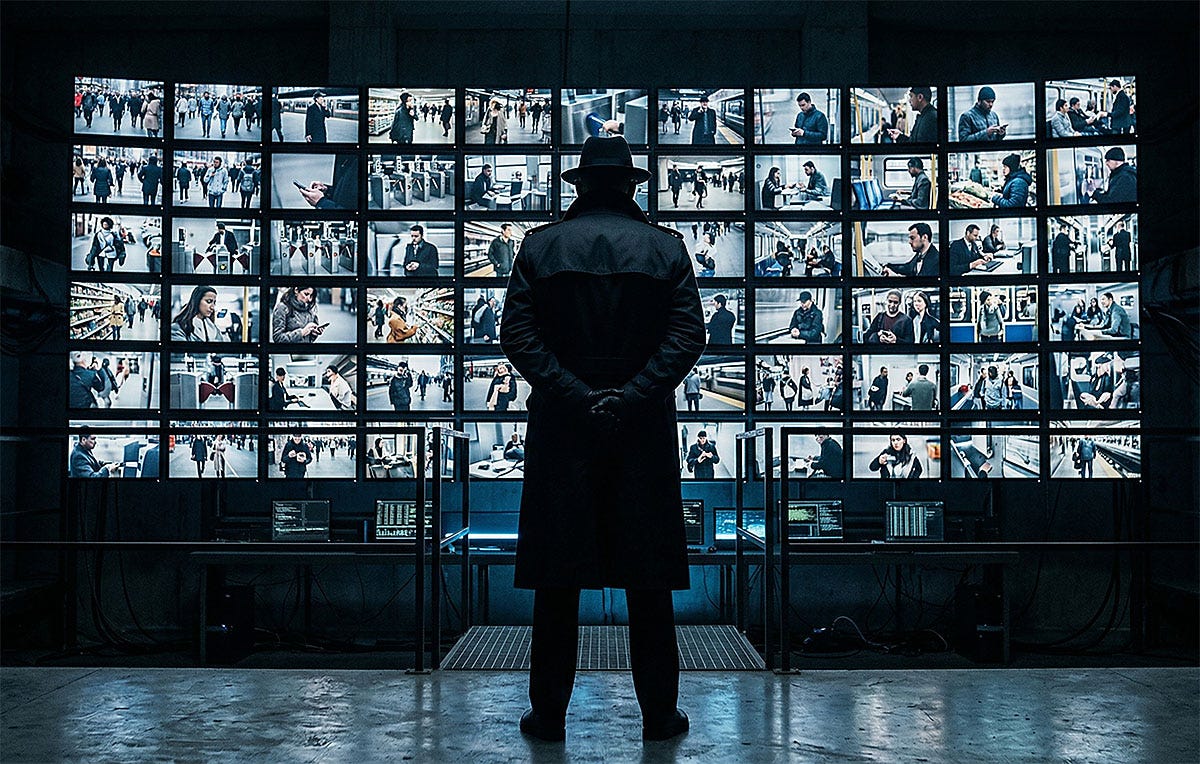
Totalitarianism today is held back not by moral restraint, but by geopolitical stalemates, military deterrence, and the fragile balance of global interests. Anyone who believes this makes the world safe is mistaken. George Orwell imagined an all-seeing surveillance society by 1984. He misjudged the date, not the direction. The technology that made his dystopia impossible then is fully functional now. And the way governments deploy it reminds me of a Brazilian who once wrote on X: “If I ever win the Mega Sena, I won’t tell anyone. But there will be signs…”
Those signs are already here — and they grow clearer by the day.
Big Brother
“Big Brother” existed long before the TV show turned it into a spectacle. Rare Earth sang about it in 1971. The reality-show version — a hundred days of cameras, contrived drama, shouting matches, romances and bedsheets — is marketed as a social experiment, a strategic game, a magnifying glass on human behavior. In truth, it is a parade of triviality.
The real Big Brother is the modern state: a government steadily moving toward total visibility of its citizens — deciding what is allowed, what may be said, what may be spent, and what must be surrendered. The boundary between administrative efficiency and structural control is dissolving at high speed.
It echoes the verse in Matthew 22:21, where Jesus, pointing to Caesar’s coin, says: “Render unto Caesar what is Caesar’s, and unto God what is God’s.” The difference today is that Big Brother will soon determine exactly what belongs to Caesar — down to the last cent — using information the citizen no longer even knows is being collected.
Europe: bureaucracy as a buffer — but not for long
In Western Europe, the annual tax return is still seen as a frustrating obligation. Belgium offers a labyrinth of codes, exceptions, and regional rules. The Netherlands has automated much of the process, yet the fear of mistakes or retroactive corrections persists.
However advanced these systems become, the tax return remains a yearly confrontation with the state’s grip on personal finances. Paradoxically, that bureaucratic friction also acts as a buffer: as long as the government does not know everything automatically, a degree of informational asymmetry survives. The citizen knows something the state does not — and that is a form of freedom.
That asymmetry is disappearing rapidly.
Brazil: a technological leap that overtakes the West
Brazil is moving beyond Europe. The Ministry of Finance is now studying the complete abolition of the annual tax return. Not because the state wants to know less — quite the opposite — but because it already knows enough to calculate everything itself.
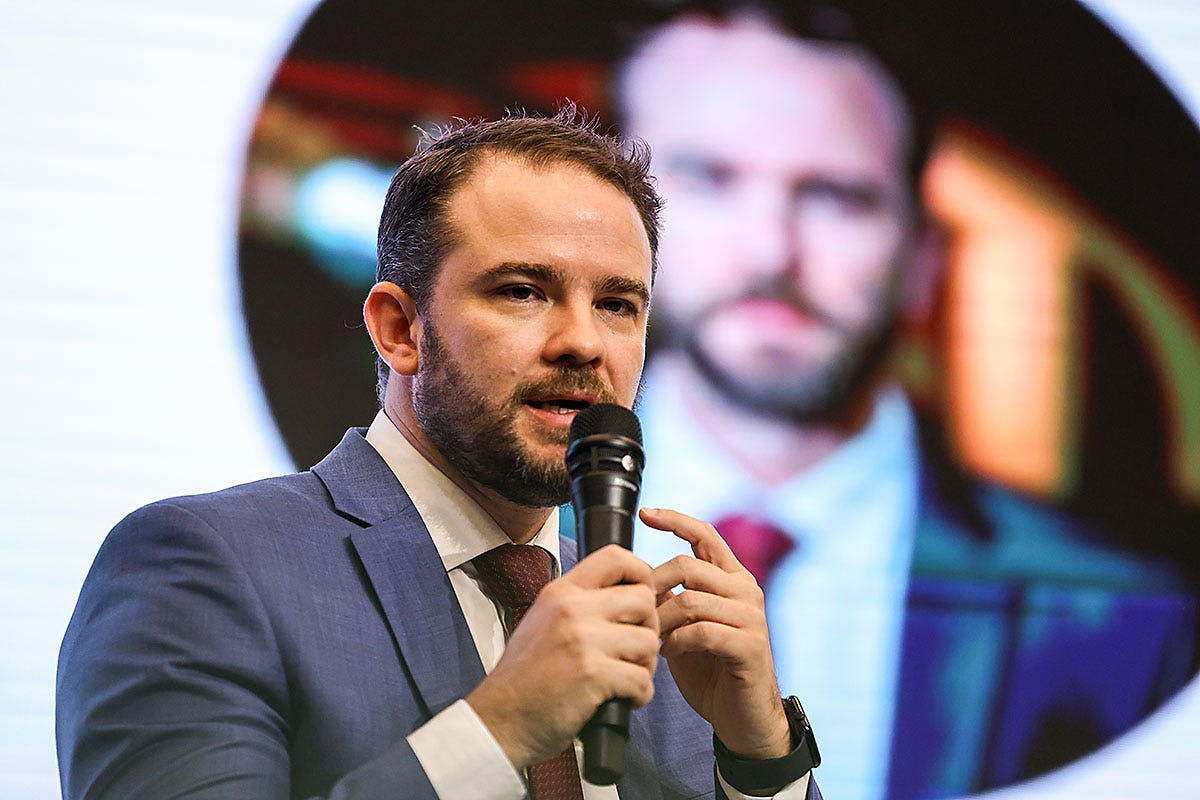
The country now operates:
- a fully digital banking system
- real-time data exchange between companies and the tax authority
- Pix, one of the world’s most advanced instant-payment systems
- a government eager to automate every administrative process
Four million Brazilians no longer had to file taxes this year. Their refunds were deposited automatically via Pix. The government calls it “taxpayer cashback”. The direction is unmistakable: responsibility shifts from the citizen to the state’s servers.
The price of convenience: a new kind of transparency
What is presented as relief from administrative stress is, in reality, the installation of a digital camera tracking every centavo. The state gains a level of insight far beyond the convenience of a vanished form. It knows what comes in, what goes out, where it originates, where it ends up, and which patterns deviate from the norm.
There is another side: this transparency makes life extremely difficult for fraudsters, corrupt politicians, thieves, and drug traffickers. Money laundering becomes a nightmare in a system where every transaction leaves a trace. Pix has become one of the sharpest fiscal lenses in the world. In this respect, Brazil is ahead of almost everyone.
The fundamental question: where does this end?
For ordinary citizens, the system offers convenience — and unprecedented dependence. And that dependence reaches into the smallest corners of daily life. I now see how even the fate of beggars and street vendors is affected. Almost no one carries cash anymore. Some informal sellers have portable card machines, but many do not. Change was always a problem; now it is nearly nonexistent.
A personal encounter illustrates this. Yesterday a young man approached me with the familiar story: robbed, stranded, everything stolen, staying in an Airbnb, and asking for help. A Pix transfer was useless, he said — his phone had been stolen too. What remains when cash disappears? Beggars outside supermarkets wait helplessly for the rare exception who still carries coins. Most people have only a phone or a card — and often not even that if they didn’t plan to buy anything. Even the most vulnerable — real or not — are being swept along by this digital shift.
For the state, the system offers efficiency — and a power with few remaining limits. For those operating in the shadows, it means the end of anonymity. The question is no longer whether this evolution will continue, but how far it will go — and who will draw the boundaries.
Why none of this should surprise us
None of this should be unexpected. As I wrote elsewhere, it is a misconception that Brazil is technologically behind. The opposite is true: in several domains, the country is far ahead of Europe and North America. What happens here is not an exotic exception but a preview of what others will eventually adopt. Slowly, then inevitably.
Photos: AI generated - Marcelo Camargo/Agência Brasil
This section is published in English. More English posts will appear here as this section grows. Interface elements may appear in Dutch because the main publication is bilingual.
Stay updated. Click below to subscribe — free of charge.