

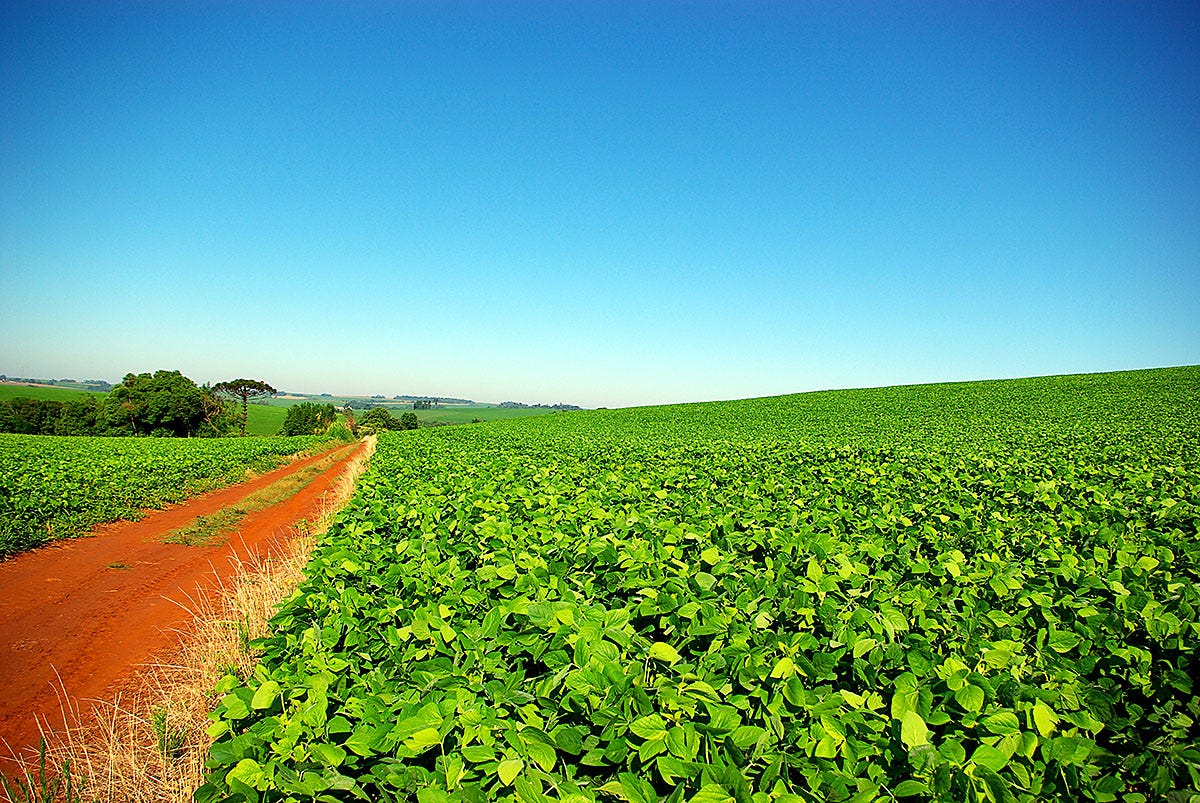
Less than fifty years ago, Brazil was a country that had to import food to feed its own people. The great turning point began in the 1970s. With the founding of Embrapa, a national institute for agricultural research, Brazil began to chart its own course. Instead of simply copying European or American methods, they looked for ways to make the acidic, infertile soil of the central highlands (the Cerrado) suitable for large-scale farming.
The result was stunning. By adding lime to the soil and developing new crop varieties that could withstand the heat, the interior turned into an endless sea of soybeans, corn, and cotton. Brazil became the world’s largest exporter of soy and a crucial player in global food security. Today, the country feeds about ten percent of the world’s population.
However, this success story has a sharp edge. The rise of large-scale farming (the ‘agrobusiness’ model) went hand in hand with a massive concentration of land ownership. Small farmers were often pushed off their land by giant corporations. This led to the creation of the MST, the Landless Workers’ Movement. For the MST and many environmental activists, industrial farming is the enemy. They point to deforestation, the loss of biodiversity, and the massive use of chemical pesticides.
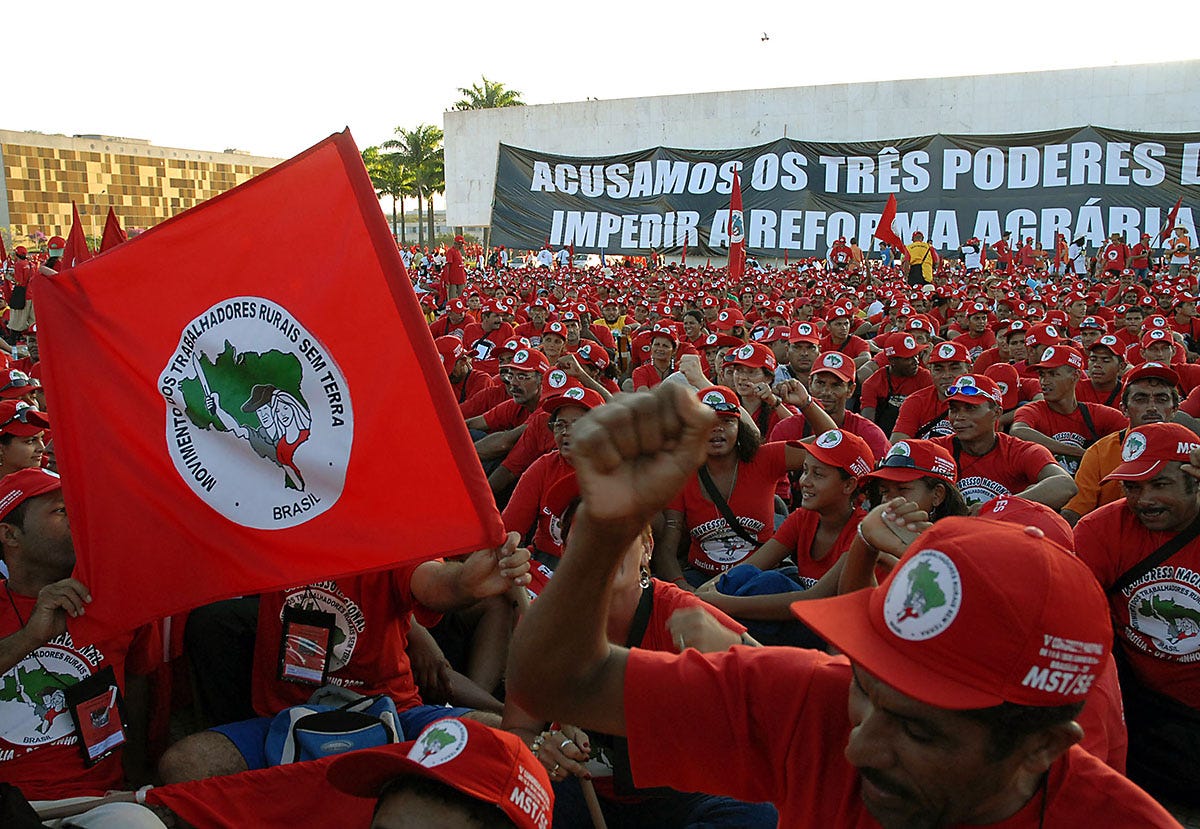
An ongoing political struggle persists: while the powerful ‘ruralistas’ in Congress fight for more space for exports, social movements demand land reform and a focus on healthy food for the local market. The government finds itself constantly caught between two fires. On one hand, they desperately need the billions of export dollars from the big companies to keep the economy afloat, but on the other, they must keep their base of landless workers and environmentalists happy. It is a constant balancing act where interests are directly opposed.
This Brazilian progress is also causing a lot of unrest in Europe, especially regarding the controversial Mercosur trade agreement. European farmers are protesting fiercely because they feel they are being forced to fight with unequal weapons. They must meet the strictest environmental standards in the world, while they fear the market will be flooded with cheap Brazilian products grown with substances that have long been banned in Europe. For the European farmer, the deal feels like a threat to the family farm, while Brazilian giants only seem to get more powerful.
Yet, there is a surprising twist to this story. Those very same large, commercial farmers—often vilified by activists—are now leading a green revolution in so-called ‘bio-inputs.’ These are natural tools like bacteria, fungi, and beneficial insects that take over the role of chemical toxins. While we in Europe often still talk about the theory and get stuck in bureaucracy, the Brazilians are already applying this on an area many times larger than the entire Benelux.
The Belgian company Biofirst is one of the players driving this change globally. As a world leader in biological crop protection, this company provides the natural ‘weapons’ that the agriculture of the future demands. While the company operates from Belgium, Brazil has become a crucial growth market for them. It reveals a strange contradiction: a Belgian company is a champion of green solutions, but the Brazilian farmer is often the one putting them into practice on the largest scale.
Why are they doing this so massively in Brazil? Not because they have suddenly become environmental activists, but out of sheer necessity. Nature in Brazil is so powerful that insects and fungi adapted rapidly to chemical poisons. Farmers noticed they had to spray more and more expensive poison for less and less result. Biological tools simply proved to be more effective and, in the long run, cheaper.
This leads to a paradoxical situation. The MST landless movement has been promoting ‘agro-ecology’ and poison-free farming for decades. It is a noble goal, but they sometimes tend to dismiss any form of large-scale farming as inherently bad. Meanwhile, the big farmers have discovered that those same biological principles also work on thousands of hectares at a time.
While the political discussion in the capital of Brasília is often stuck in a ‘us-versus-them’ mentality between agrobusiness and social movements, the two worlds are quietly moving toward each other on the land. The technology once championed by idealists is now becoming the lifeline for the country’s largest exporters. Brazil shows that the road to sustainability does not always run through politics or ideology, but often through practice in the field. The country became the world’s breadbasket through innovation, and it is that same drive for renewal that is now ensuring a greener future—even if it comes with trial and error.
Photos: Tiago Fioreze - Wikimedia Commons / Wilson Dias - Agência Brasil
Stay updated. Click below to subscribe — free of charge.