

There are moments in recent Brazilian history whose full meaning only becomes clear in hindsight. One of them unfolded on April 22, 2020, in the middle of the pandemic year, when a ministerial meeting was recorded and later — by order of Supreme Court justice Celso de Mello — made public. For hours, Brazilian news channels looped fragments of that video. Foreign media picked it up, social networks boiled over. But anyone who had been following events already knew that the story was not about the insults, the swearing, or the chaos around the table. It was about one sentence, spoken by a visibly agitated Jair Bolsonaro: “I tried to replace the security people in Rio de Janeiro, and it didn’t work. That has to end. I don’t want to wait until my family gets caught.” And then, even sharper: “If the police chief can’t be replaced, then it will be his boss. And if not the boss, then the minister.”
Watching that meeting today reveals more than a president losing his temper. It exposes how fragile Brazilian democracy still was, barely four decades after its restoration. Despite the protests of Bolsonaro supporters who insisted nothing unusual had happened, that period now stands in the history books as one of the darkest chapters since the end of the dictatorship. The way security forces, police and intelligence agencies were treated as personal instruments left a stain that will linger for a long time.
A few days later, exactly what Bolsonaro had threatened in that meeting came to pass. Sérgio Moro, then minister of justice, resigned and accused the president of pressuring him to replace the head of the federal police for personal reasons. The video confirmed his words. What became visible was not merely a clash between two men, but a method of governing: security institutions were not meant to be independent, but loyal. The state was not to function according to institutional logic, but according to the interests of the presidential family.
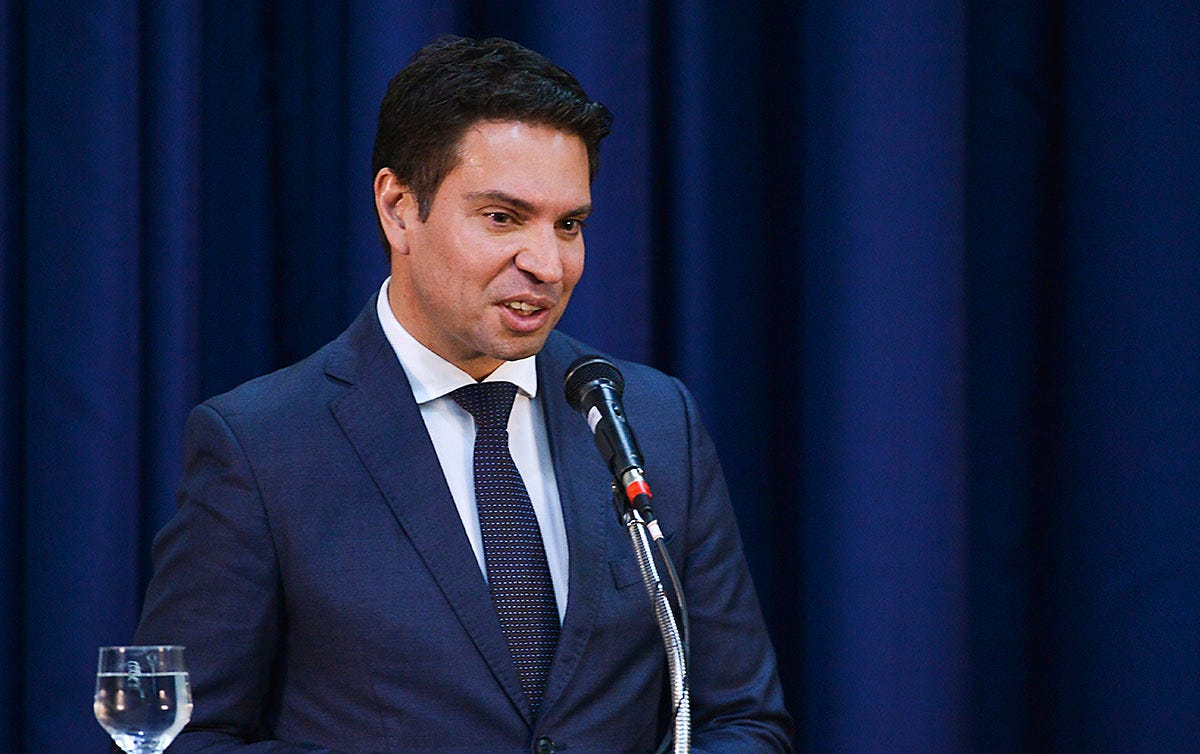
It is in that light that Alexandre Ramagem enters the stage. The meeting was not about him, but it explains why he would later become so important. What Bolsonaro attempted with the federal police, he also attempted with ABIN, the intelligence agency. And Ramagem was the man who made that possible. He led ABIN during a period in which the agency increasingly appeared in investigations involving political monitoring, the protection of allies, and the gathering of information that had little to do with national security. He was the loyal executor of a logic already visible in that April 2020 meeting: institutions were to serve the president, not the state.
The rest of the story is known, but worth retelling. Ramagem was later elected to the Rio city council, but the investigations caught up with him. The Supreme Court sentenced him to sixteen years in prison for his role in an armed organization that sought to overthrow the democratic order. He lost his mandate, was expelled from the federal police, and was forbidden to leave the country. Yet he left anyway — through Roraima into Guyana, and from there to the United States, using a diplomatic passport that had never been confiscated. His name landed on Interpol’s wanted list. Brazil requested his extradition.
And then, not long after, his name suddenly appeared in the system of ICE, the U.S. immigration service. A traffic stop in Orlando, according to the first version. A minor infraction. But in the United States, a banal event can trigger a bureaucratic chain reaction. An officer enters a name. A signal appears. An immigration status turns out to be unclear. And ICE — not a political body, but an administrative authority — detains someone.
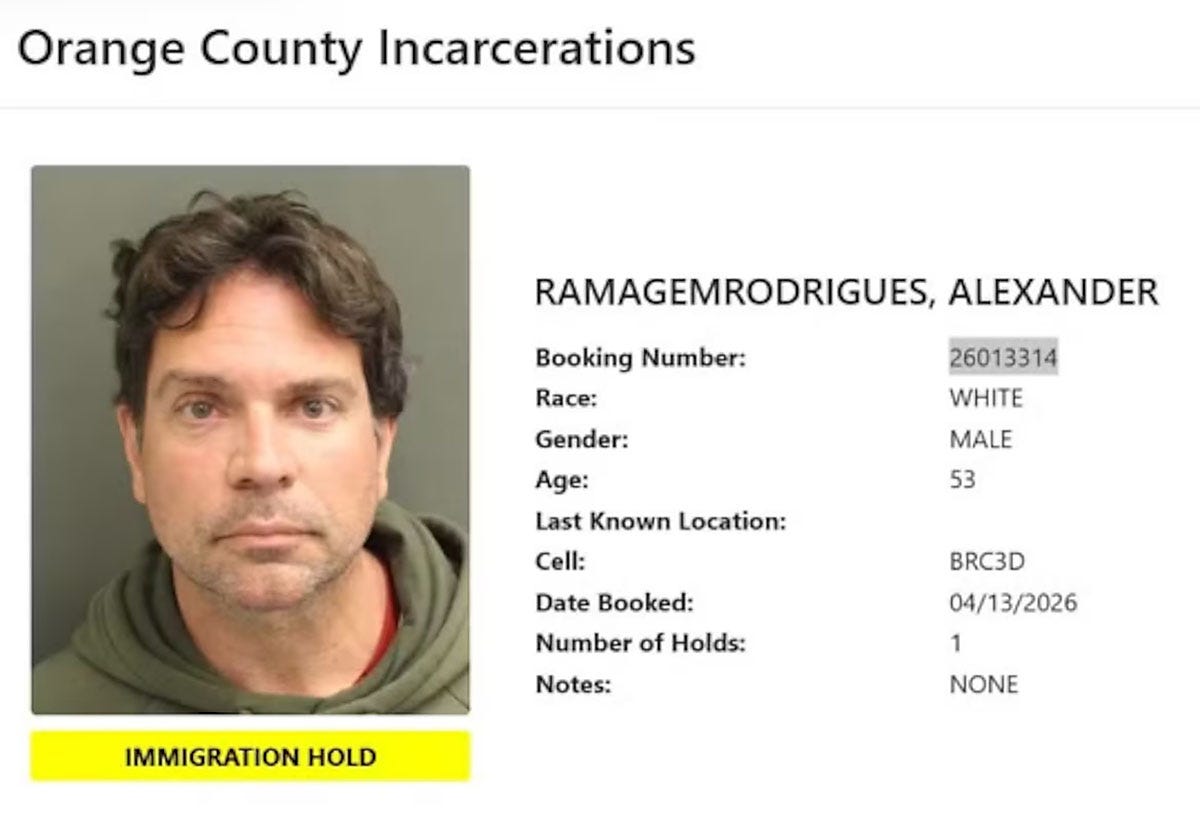
Brazil’s federal police now say the arrest was the result of international cooperation. That sounds grander than it likely is, but it does show that Ramagem was not only in an American database, but also in a Brazilian request. And this time, something was done with it.
The contrast with others from the same circle is striking. General Augusto Heleno, a former minister who was also convicted, remains at home under house arrest due to age and health. Bolsonaro himself received the same arrangement. But Ramagem is younger, more mobile, and above all: he fled. That makes him, in the eyes of the justice system, not a vulnerable elder but a fugitive.
And so it happens that a man who once led Brazil’s intelligence service, who for years was one of the most loyal figures around Bolsonaro, now sits in a detention center in the United States, registered as “in ICE custody,” with even his exact location undisclosed. Not because Washington wanted to send a political message, but because bureaucracy sometimes strikes harder than geopolitics.
Photo: Valter Campanato/Agência Brasil
Stay updated. Click below to subscribe — free of charge.