

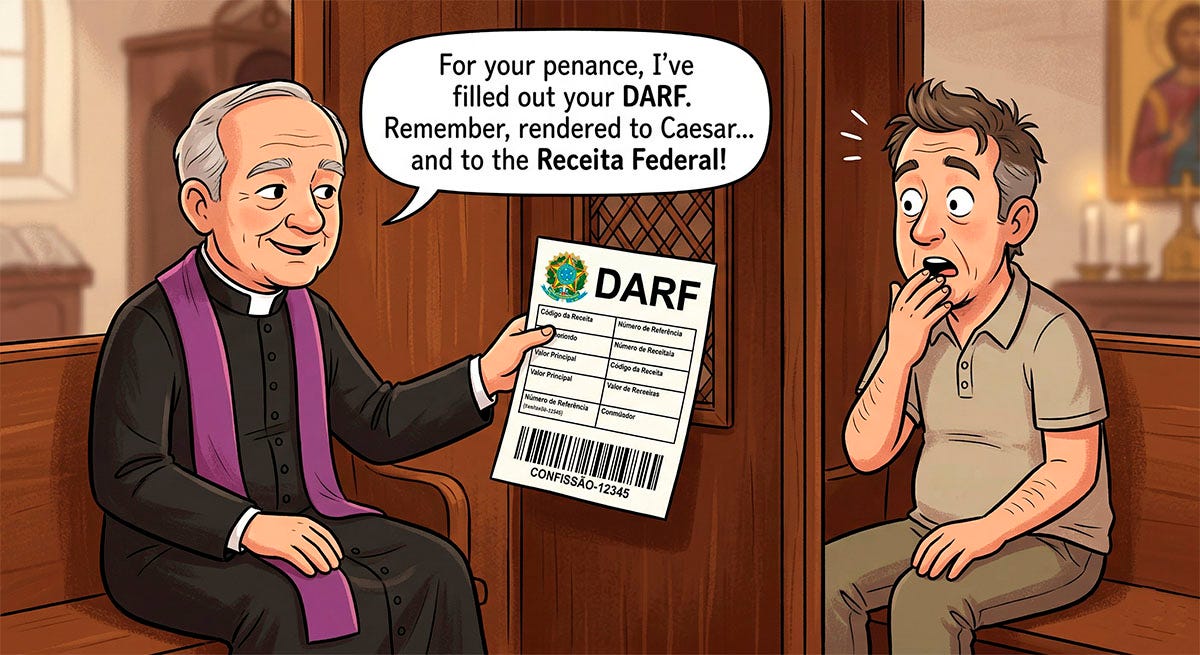
Within Catholicism, “sin” is not some vague moral misstep but something quite concrete: a deliberate choice against God, against yourself, or against others. In short: you know something is wrong, and you do it anyway. According to Catholic teaching, three elements must be present: the act must be serious, you must understand that it is wrong, and you must freely choose it. There are everyday sins and mortal sins. And then there are the punishments: not legal penalties, but natural consequences. It begins with guilt, damaged relationships, and inner turmoil. The spiritual punishments are heavier: hell and purgatory. But forgiveness is always possible—as long as you live.
But what about smoking, drinking, driving a polluting vehicle, consuming sugary soft drinks, extracting resources from the earth such as iron ore, oil, and natural gas, engaging in activities that harm the environment, or gambling that can lead to addiction? A priest hearing confession would hardly know what penance to assign for such “offenses.” The Brazilian government, however, has an answer.
Starting in 2027, part of the current IPI (tax on industrialized products) will be replaced by an Imposto Seletivo (Selective Tax), a levy applied only once, usually at the point of production or first sale. The Ministry of Finance emphasizes that the overall tax burden for the average citizen should not rise dramatically. The additional revenue from this “sin tax” is meant to help keep the general rates of the new VAT system (IBS and CBS—the state and federal components of the new value-added tax) lower.
Why now?
The Brazilian government is aligning itself with international trends. Many European countries and the United States have long used similar taxes. Research shows that higher prices directly reduce the consumption of tobacco and sugar, which in the long term lowers public healthcare costs. Environmental economics also demonstrates that higher taxes on polluting activities encourage behavioral change and innovation in cleaner technologies.
In short, the sin tax is a tool for the Brazilian government to promote healthier lifestyles and protect the environment while modernizing the tax system. It is a blend of public health policy, environmental policy, and fiscal reform.
What it will cost consumers
Although the government insists that the reform should be “budget-neutral” for the treasury, the Imposto Seletivo (IS) is specifically designed to raise the price of certain products to discourage consumption. As we are in 2026 and implementation is planned for 2027, the final rates are still the subject of heated debate in Congress. However, concrete estimates and draft legislation already give us a clear picture of the impact on the wallets of Brazilians (and of non-Brazilians who happen to be in the country).
The hardest hit will be tobacco and strong alcoholic beverages. The estimated increase for cigarettes is 250%, meaning the price of a pack could more than double. Spirits will rise between 46% and 62%, depending on alcohol content: the stronger the drink, the higher the tax. Beer will also become more expensive (with variable rates). The industry (Ambev/Heineken) is already raising prices in anticipation. Sugary soft drinks are expected to rise by about 32%. Sugar-free versions will face lower taxes. Electric vehicles will face rates of up to 34%, increasing the total tax burden by around 4%—a measure intended to protect the Brazilian auto industry but criticized internationally for potentially slowing the electrification of the vehicle fleet.
Impact on household budgets
The direct effect on a household budget depends heavily on consumption patterns. For an average family, these are the key points:
At the supermarket: Products high in sugar (soft drinks, artificial juices) will become noticeably more expensive. This may raise the weekly grocery bill unless families switch to healthier alternatives that will be taxed at lower rates under the new VAT system (IBS/CBS).
Compensation through basic goods: A key part of the reform is that the Cesta Básica (the basket of essential foods such as rice, beans, eggs, milk, cassava, and certain vegetables) will be completely exempt from tax. For families that primarily buy basic foods, this could partially offset the increases on other products. The government hopes this will reduce regressive effects—where poorer households pay a proportionally higher share of their income in taxes.
Ongoing costs:
The tax on the extraction of oil and gas (0.25%) is relatively low, but it may indirectly affect transport and energy prices, making everything slightly more expensive. In a country where logistics depend heavily on trucks, this effect can be noticeable.
The risk of “over-shifting”
In Brazil, companies often use the introduction of a new tax as an opportunity to raise prices slightly more than necessary to protect their margins. The beer sector is a good example: prices are already rising faster than inflation, even before the law takes effect. Soft drink producers and tobacco companies have used similar strategies in the past.
Economists call this overshifting: companies not only pass the tax on to consumers but increase prices even further because consumers expect a price hike anyway. The government monitors this, but has few tools to prevent it.
Conclusion
For “sinful” luxury items, people will have to dig deeper into their pockets in 2027, while the government hopes that households will compensate by buying cheaper basic foods. The reform is ambitious: it aims to simplify the tax system, improve public health, protect the environment, and reduce inequality—all at the same time. Whether all these goals can be achieved simultaneously will only become clear after several years.
Quitting smoking and drinking is certainly a good idea, and will prevent guilt, damaged relationships, and inner turmoil—both in Catholic doctrine and in your wallet.
Stay updated. Click below to subscribe — free of charge.