

Sometimes you read something that forces you to look at a country differently. That’s what happened when I came across the analyses of Drew Crawford, an American living and working in Brazil, moving between U.S. investors and Brazilian industry. He doesn’t write like an academic. He writes like someone who sees, every day, what most people overlook. And although not every detail in his work can be verified down to the decimal, the broader picture he draws touches on a reality many are unaware of.
His message is surprisingly simple: the world is changing — and Brazil occupies a position we have underestimated for years.
He begins with something we all sense but rarely articulate: the old world order — the one built on stable shipping routes, predictable commodity prices and unlimited access to energy — is breaking down. Maritime routes are disrupted more often. Oil prices spike with every conflict. Countries restrict exports of critical minerals. And food prices no longer fall the way they used to.
In this world, Crawford says, you must ask one question:
Where do the things the world cannot live without actually come from?
And who controls them?
In his view, Brazil is one of the few countries that holds almost all the pieces of that puzzle.
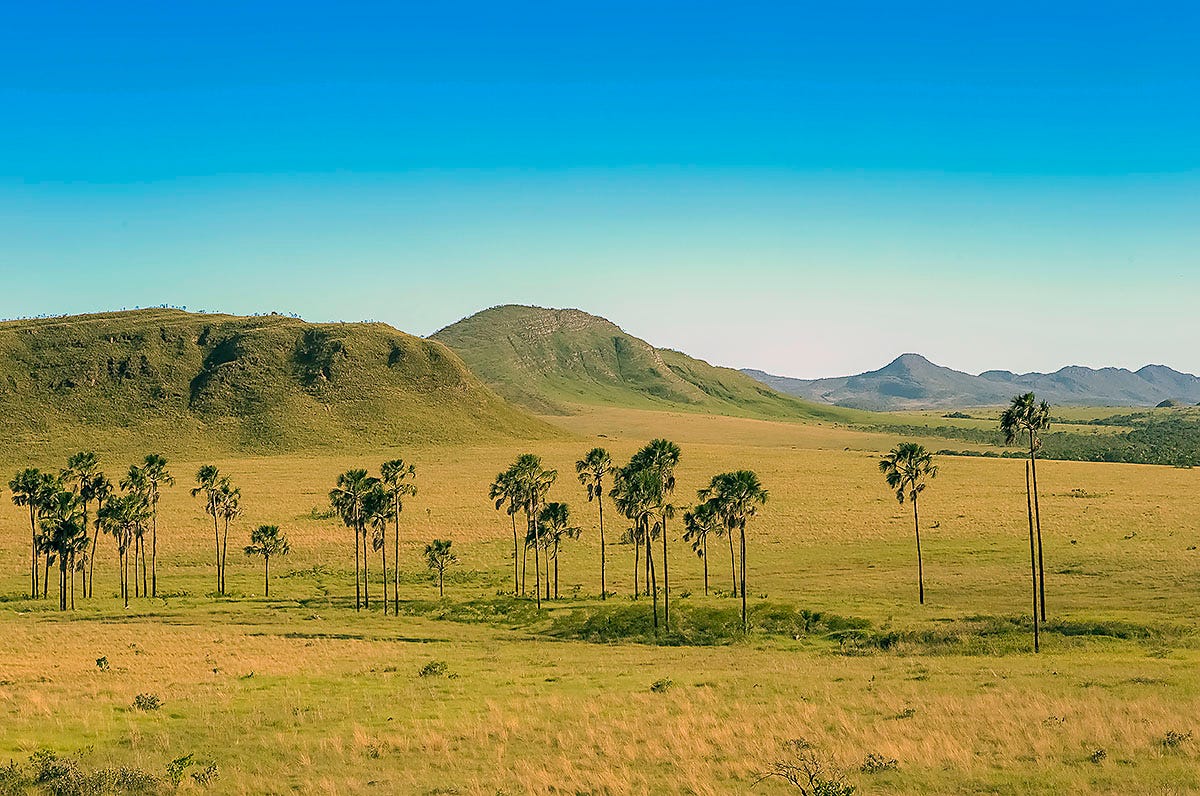
He points to the enormous amount of fertile land still unused. While other countries lose farmland, Brazil can expand production without touching the Amazon. He highlights water: 12% of the world’s freshwater flows through Brazil. That alone is remarkable, but there is something even more surprising — something almost no one knows. Beneath the Amazon lies a massive underground water reserve, the Alter do Chão aquifer, one of the largest in the world. Researchers estimate it contains around 86,000 cubic kilometers of water, more than twice the volume of the well-known Guarani aquifer in southern Brazil.
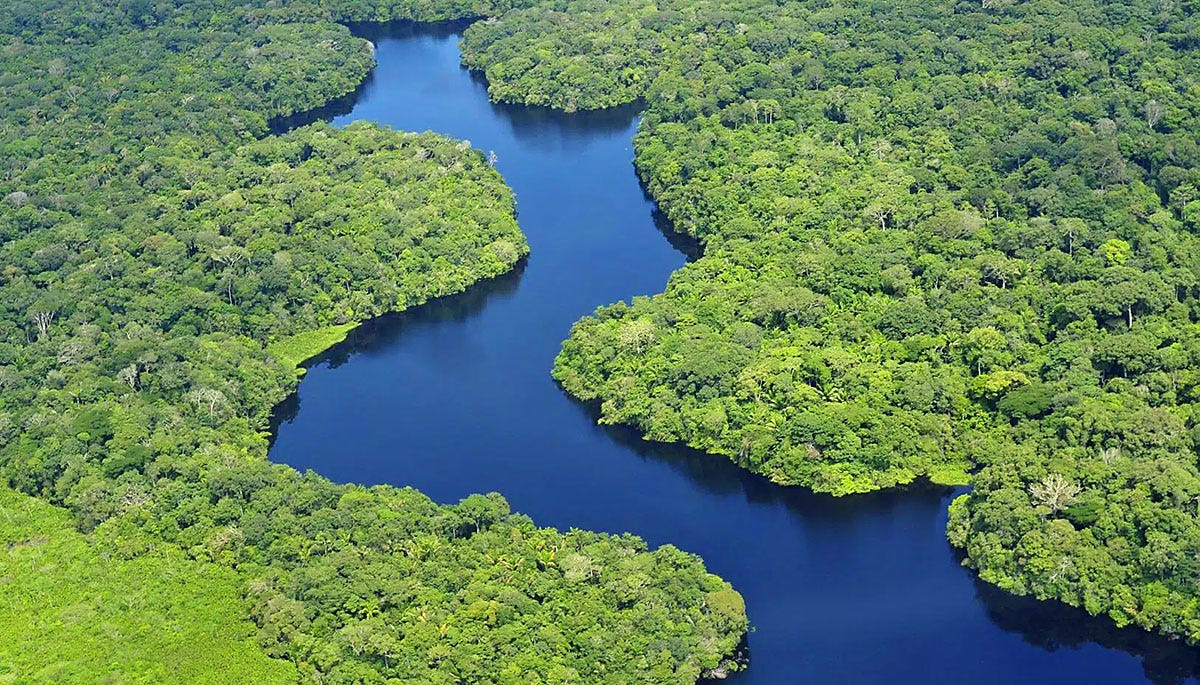
The Alter do Chão aquifer is extraordinary for a simple reason: it is constantly replenished by Amazon rainfall. While many countries are draining their aquifers with no natural recovery, Brazil has a system that renews itself. In a century where water is increasingly a source of conflict, this is a quiet — but enormous — strategic advantage.
He also points to energy: one of the cleanest electricity mixes in the world, combined with high-quality oil exported through safe Atlantic routes.
And then there are the minerals. In his words: if you look at a world map of the metals essential for the energy transition — lithium, nickel, graphite, manganese, rare earth elements — Brazil appears everywhere. Sometimes at the top, sometimes in the top three, but always present. Not every number he cites can be confirmed with precision, but the direction is clear: Brazil is rich in the resources that will define the coming decades.
Crawford also sees something else: a country of 215 million people that, in just a few years, built one of the largest digital banking sectors in the world. An economy that is formalizing and digitizing despite political noise and bureaucratic obstacles.
His point is not that Brazil is perfect. Far from it: he mentions bureaucracy, volatility, infrastructure gaps. But he also argues that these are precisely the reasons the country remains undervalued. If Brazil functioned like Switzerland, prices would have adjusted long ago.
What he is really trying to show is this:
In a more unstable world, the value of countries with food, water, energy, minerals and safe export routes rises. And Brazil has all of them.
You don’t have to agree with all his conclusions. You don’t have to take his numbers literally. But his work does reveal how little attention we pay to the physical reality of nations — and how quickly that reality is becoming more important than the financial models we’re used to.
Anyone who understands this also understands why more people are taking a fresh look at Brazil. Not as an exotic emerging market, but as a country that may play a larger role in a world being reshaped.
And perhaps it’s worth remembering — especially for Brazilians themselves — that few nations on Earth possess such a rare combination of natural strengths. There is real reason for pride here, even if the country doesn’t always recognize the power it holds.
Sources / inspiration
This essay is based on the analyses of Drew Crawford (American in Brazil. Connecting U.S. capital with Brazilian industry. Austral Continental), especially:
– The global order that kept energy flowing…
– his analysis of Vale and Brazil’s natural-resource sector.
His full pieces are highly recommended for anyone who wants to explore his arguments in depth.