

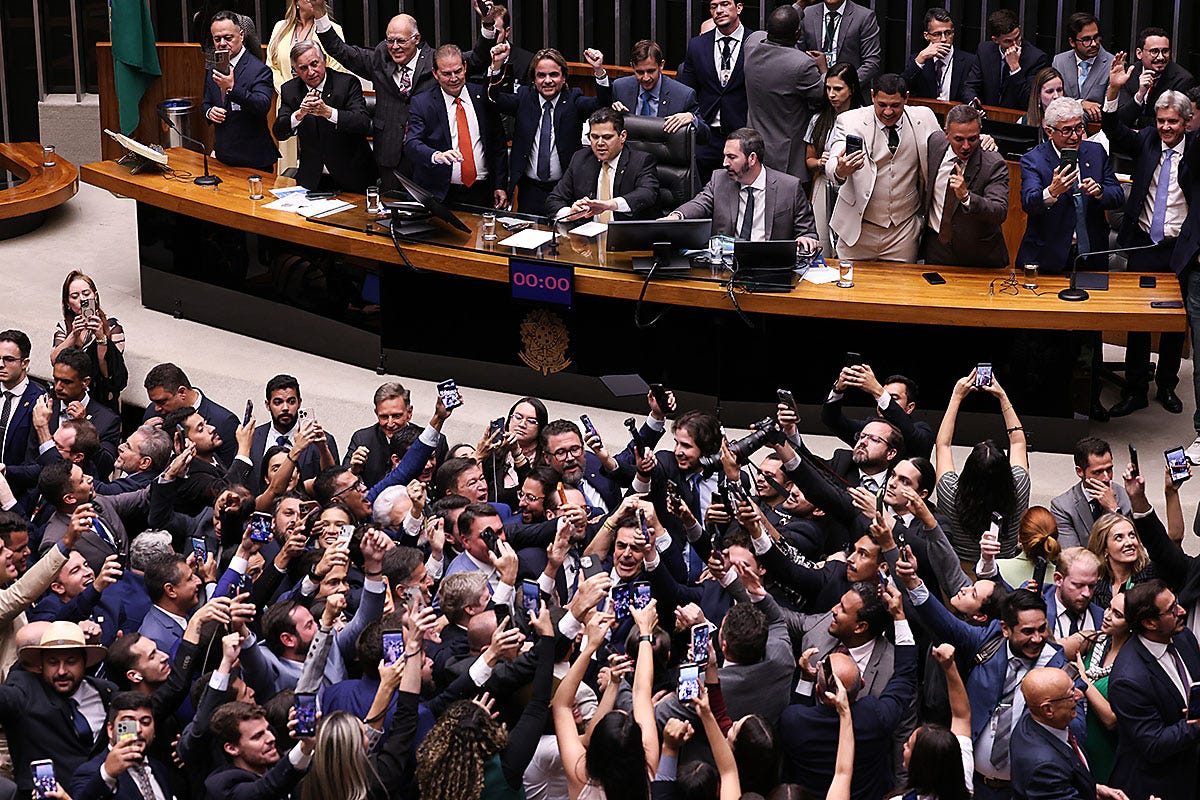
The Brazilian party system as we know it today is the product of a strange paradox: a democracy born in the eighties with the promise of freedom, but which has since become so fragmented that it has become almost ungovernable. While the country emerged from the military dictatorship with a handful of political movements, Brazil now counts about thirty parties — of which more than twenty hold seats in Congress. To an outsider, it sometimes seems as if every politician has their own logo.
How we got here
The 1988 Constitution triggered an explosion of political freedom. For years, it was relatively easy for politicians to start their own party, mainly because the system generously rewarded small parties with airtime and public funds. The result: a forest of micro-movements, mergers, splits, and opportunistic alliances.
Nowadays, founding a new party is less simple. The Superior Electoral Court (TSE) requires hundreds of thousands of signatures, spread across at least nine states, to prove that a party is national and not a local hobby project. On top of that, there is now an electoral threshold that determines which parties maintain the right to funding and speaking time. But despite these stricter rules, the landscape remains one of the most fragmented in the world.
Left, right, and the flexible middle
In this mosaic of parties, the traditional division into left, right, and center is often fluid. The PL (Partido Liberal) currently dominates the right wing, while the PT (Partido dos Trabalhadores) remains the largest force on the left. At the far edges stand mini-parties like Rede or PCB, sometimes with one representative, sometimes with none at all.
Most parties, however, fall into the broad, pragmatic middle block that Brazilians call the Centrão: a collection of parties that vote less ideologically than strategically and often provide the deciding vote in important decisions. Here, ideology is less a compass than an exchange rate.
Who pays for all of this?
Since companies have been banned from making political donations in 2015, the Brazilian taxpayer fully foots the bill for the system. Two large public funds keep politics running:
The Party Fund: approximately 1.2 billion Real annually (about 205 million euros).
The Election Fund: once every four years, nearly 5 billion Real (about 855 million euros).
For a European, these are substantial amounts; for a Brazilian, with a minimum wage of around 1,500 Real, they are simply astronomical. The largest parties receive the most money, further strengthening their power position. The citizen thus finances not only the state, but also the marketing of thirty political movements — whether they want to or not.
In short: Brazilian democracy is (very) expensive, and everyone pays for it.
From ideological struggle to raw polarization
The current polarization seems new, but it has deep roots. For years, politics was dominated by the struggle between the PT and the PSDB. Two parties that emerged from the resistance against the dictatorship, but fundamentally differed on the path to development.
The PSDB, led by Fernando Henrique Cardoso, focused in the nineties on economic stabilization, privatization, and the Plano Real — the currency that stopped hyperinflation. Modernization was their mantra.
The PT, with Lula as its figurehead, fiercely resisted almost every major reform of the PSDB. They voted against the 1988 Constitution, against the Plano Real, and against privatizations. They presented themselves as the moral alternative to what they saw as a neoliberal project.
It was only when Lula wrote his famous “Letter to the Brazilian People” in 2002 — in which he promised not to overturn the economic foundations — that he was able to win the elections. Ironically, once in power, the PT adopted many of the PSDB frameworks, supplemented by large social programs.
It was a period of sharp but institutional polarization: two sides of the same coin.
The breaking point
That balance collapsed due to corruption scandals (such as Lava Jato) and the recession under Dilma Rousseff. The PSDB imploded and lost its role as the moderate counterpart to the PT. The vacuum was not filled by a new central force, but by the radical right wing around Jair Bolsonaro.
Since then, polarization has been rawer, more personal, and less institutional. The middle has largely disappeared.
The crisis of the PT: a party stuck to one man
The PT has another problem: it is so strongly connected to Lula that it is difficult to imagine a future without him. For a new generation of voters — pragmatic, digital, less ideological — Lula is an icon from another era.
Meanwhile, figures are appearing on the right and in the center who respond exactly to this new spirit of the times. Influencer-politicians like Pablo Marçal use social media and AI as an ideology: success through one’s own strength, not through social programs. This clashes head-on with traditional PT rhetoric.
Possible successors within the PT
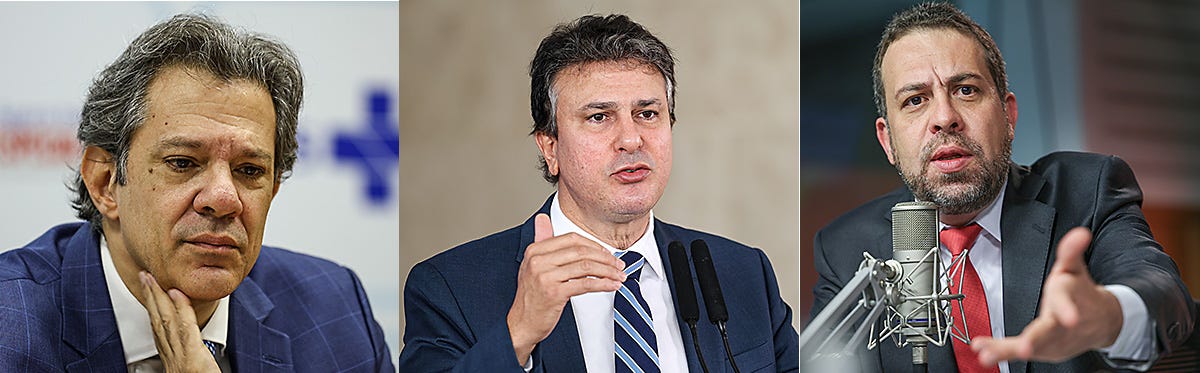
Fernando Haddad: intellectual and competent, but lacks Lula’s grassroots appeal.
Camilo Santana: successful in Ceará, but does not yet have a national presence.
Guilherme Boulos: young and charismatic, but his past with the MTST scares off the middle class.
Research by Quaest (2025–2026) shows that more than half of Brazilians no longer identify with left or right. They want a government that works like a modern app: efficient, transparent, and without the noise of Brasília.
As a result, the PT is in a paradox: it holds power, but seems to be losing its connection to the future.
2026: a choice between two eras
The 2026 elections are not just about who governs the country, but about which political era Brazil leaves behind. Will the voter choose once again for the familiar figure of Lula, or for a new, digital leader who promises to tear down the old structures — including those of the PT?
What is certain: the country faces an enormous challenge. Politically, economically, and institutionally. And whoever wins in October will inherit a system that is expensive, fragmented, and exhausted.
There is a lot of work to be done.
Photos: Lula Marques - Marcelo Camargo - Fabio Rodrigues Pozzebom / Agência Brasil
Stay updated. Click below to subscribe — free of charge.