

It was twenty years ago today...
No, this isn’t about The Beatles and Sgt. Pepper. But it has been twenty years since I ended up in a nasty situation that I remember to this day as if it happened yesterday.
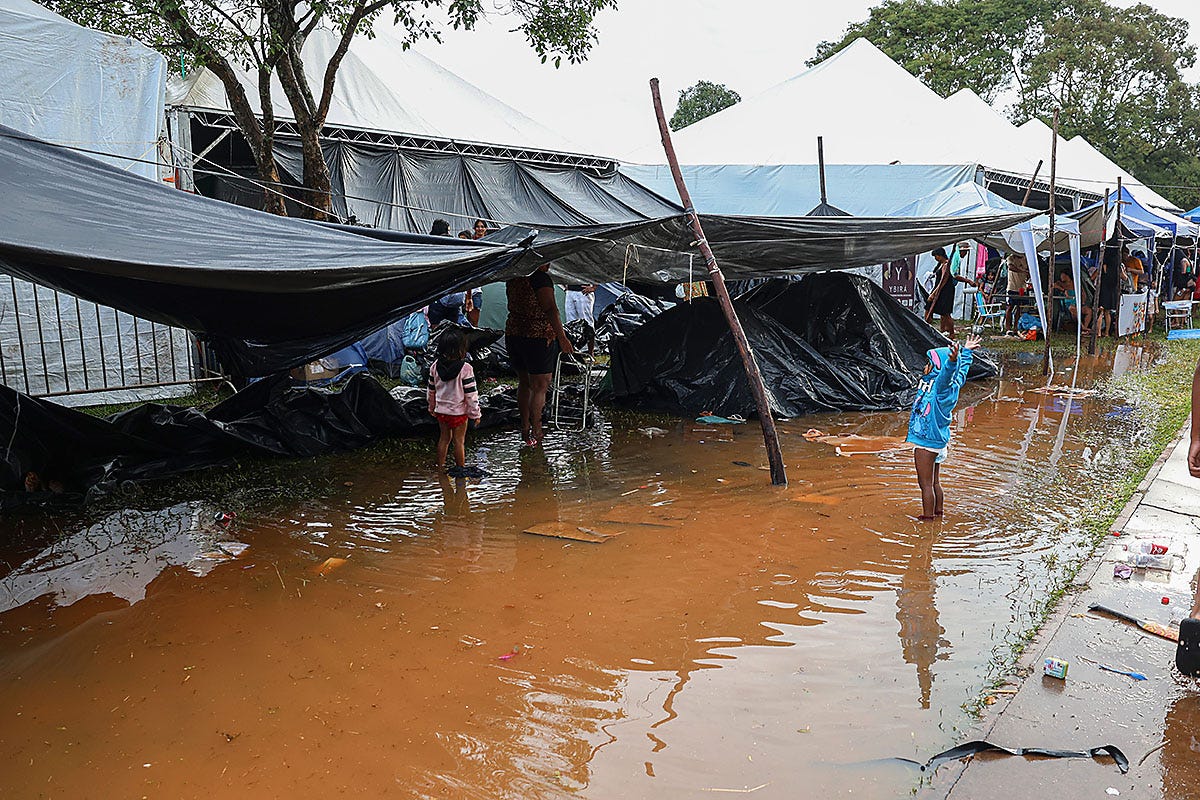
It was an ordinary weekday. I left Duque de Caxias on the outskirts of Rio de Janeiro and was driving home via the busy and rather dangerous Avenida Brasil right during rush hour. The sky was overcast and it started to rain. Not just a drizzle: it became a downpour. Just as I thought it was starting to let up, the opposite happened. Within minutes, the familiar main road turned into a river with dirty dark water rising rapidly. Traffic, which was already struggling, came to a complete standstill. With a pounding heart, I watched the water level rise dangerously close to the vehicle’s windows. Fortunately, I noticed I was stuck in front of a car dealership, and the driveway was slightly higher. I managed to squeeze my way onto it. Another fear was the proximity of the notorious slum Vigário Geral. After all, it is not uncommon for criminals to quickly take advantage of such situations to relieve stranded motorists of their belongings.
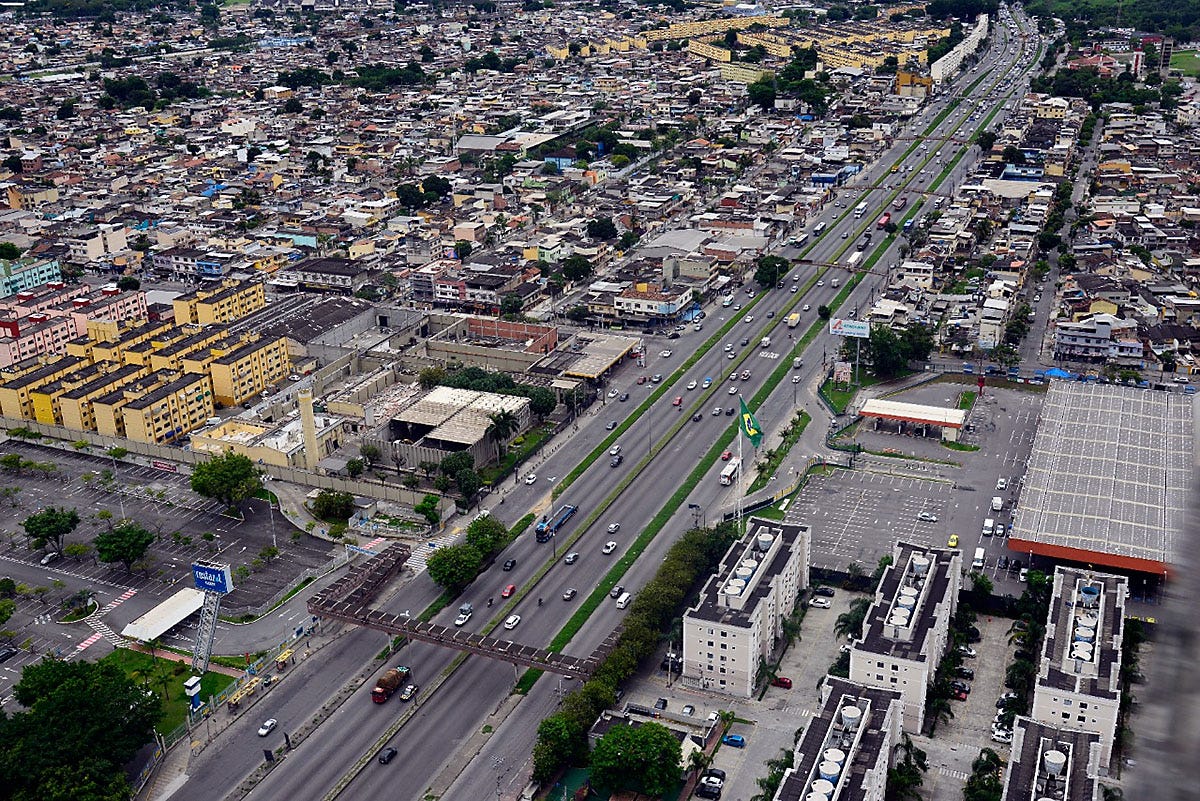
I made it through unharmed, though dirty water did seep in, which meant I had to let the carpets dry for several days afterward, not to mention the unpleasant smell.
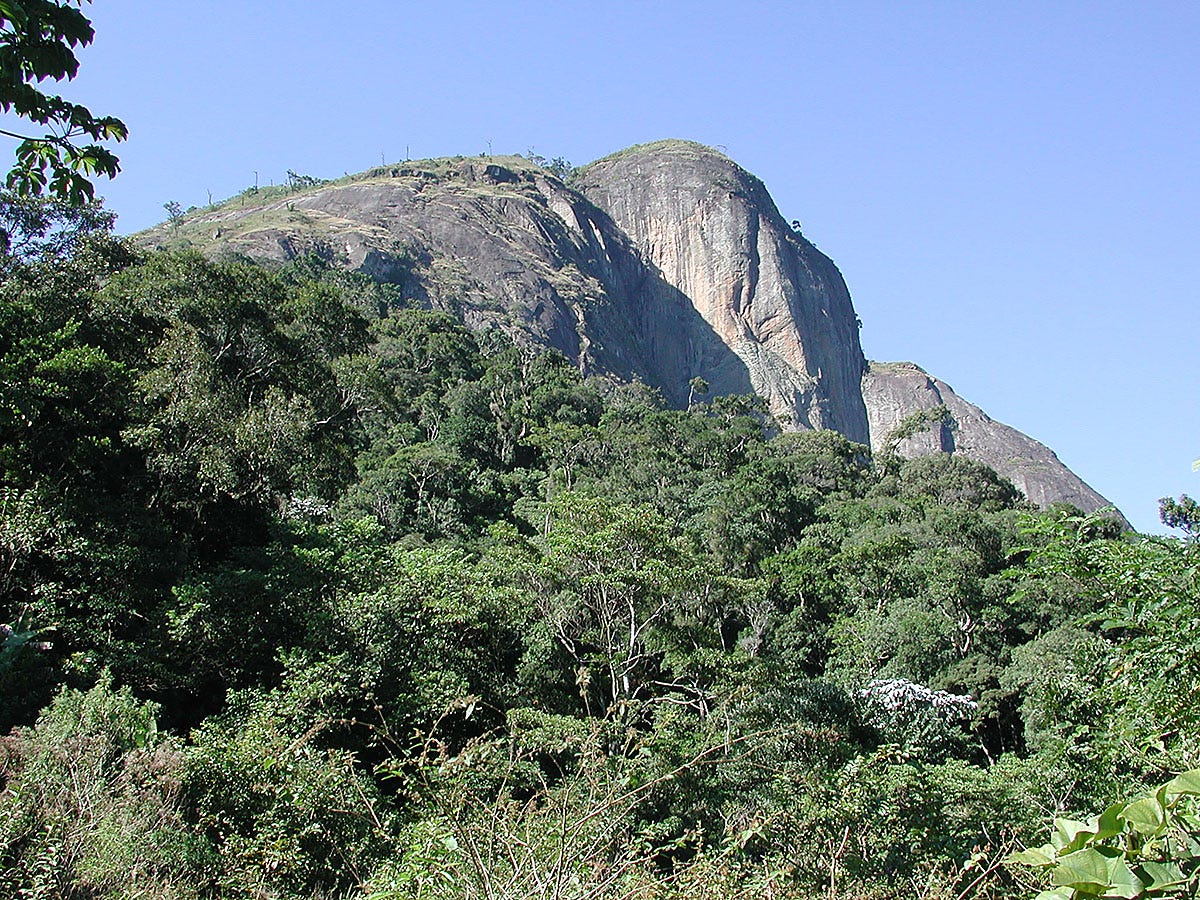
I had a similar experience a few years earlier during the climb to the mountain city of Petrópolis. The road in question is known as the BR-040. The specific section of the highway that climbs through the mountains is called the Rodovia Washington Luís. The route starts in the lowlands of Rio de Janeiro state and winds through the Serra da Estrela to an altitude of about 800 meters. The climb is famous for its steep walls and the lush vegetation of the Atlantic rainforest surrounding the road. It is one of the oldest paved mountain roads in the country and forms the main link between the city of Rio de Janeiro and the Serrana region. It is exceptionally beautiful; both the ascent and the descent offer stunning views. That day I was unlucky. The particularly heavy rain made driving very dangerous and I had no choice but to find a safe spot and wait until the worst was over.
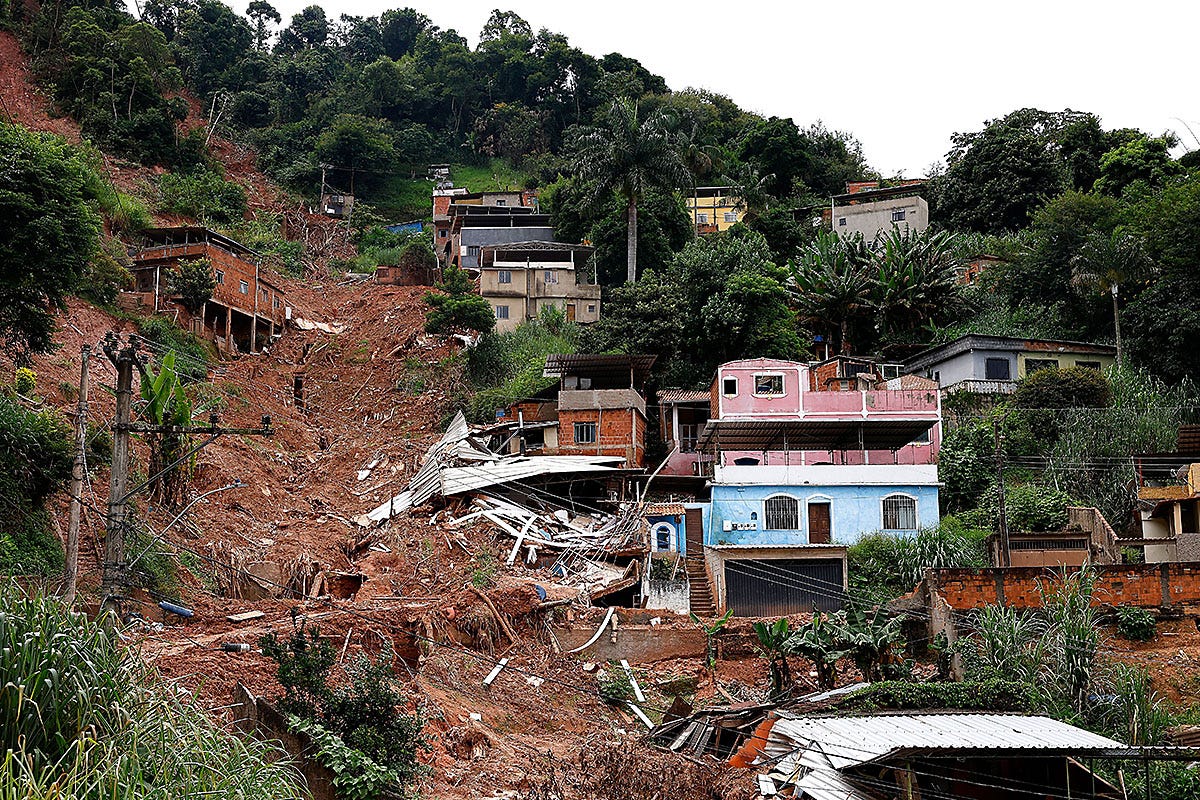
On December 23 and 24, 2001, Petrópolis was hit by an unprecedented cloudburst. In just a few hours, more rain fell than usually comes down in an entire month. This led to massive mudslides and floods that affected entire neighborhoods on the hills. Ultimately, more than fifty people died in Petrópolis alone, and some sources even speak of 66 deaths in the entire region. Many people went missing under the debris and mud. The 2001 disaster is etched into the collective memory because it took place during Christmas. President Fernando Henrique Cardoso visited the city at the time to oversee the damage. It was one of those moments when the vulnerability of the historic mountain city became painfully clear, especially in the poorer neighborhoods built against the slopes.
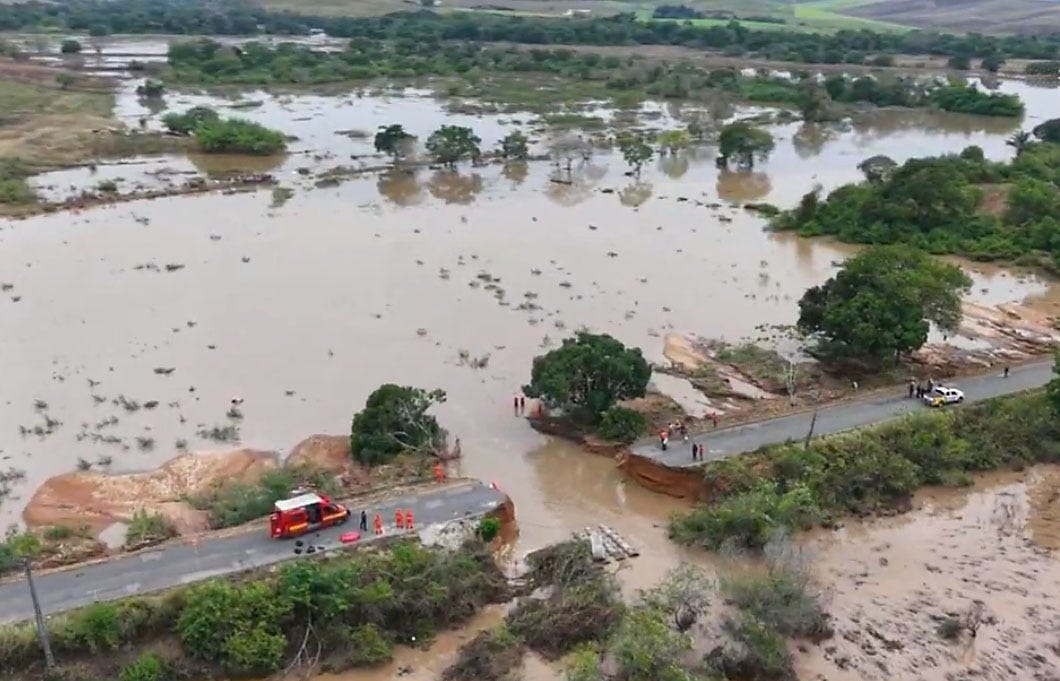
This week, the states of Pernambuco and Paraíba were in the news again for the same reasons. And throughout all these years, Brazilians in almost every region have been startled by such natural disasters.
In recent years, Brazil seems to increasingly begin with water. Not the soft, warm ocean water that tourists dream of, but the brutal, merciless water that falls from the sky as if someone above our heads has opened a massive set of floodgates. In Pernambuco and Paraíba, I saw the same images again that have become so familiar: houses sinking into mud, people wading through brown rivers with plastic bags over their heads, children on mattresses serving as rafts. It is a kind of national déjà vu. You know it is coming, you know things will go wrong, and yet you are amazed every time by the force with which the rain strikes.
And while the northeast drowns, the south reminds us that Brazil is not one country but a collection of climates that sometimes contradict each other. In Rio Grande do Sul, Santa Catarina, and Paraná, it was not tropical showers but subtropical storms, cold fronts, and floods that paralyzed entire cities. Bridges disappeared, villages became islands, and people watched helplessly as their lives were rewritten in a few hours. The contrast is almost ironic: in a country still seen by foreigners as an eternal summer, it is precisely the winter that hits the hardest.
That misunderstanding continues to surprise me. For many Europeans, Brazil is a kind of postcard that never changes: palm trees, sun, beach, samba. They do not know that it can freeze in Curitiba, that Gramado is sometimes covered in a layer of snow, or that the highlands of Minas have cold nights that chill you to the bone. They do not know that the days here are shorter, that the seasons do not fit neatly into boxes, that the rain does not come when you think it will, and that drought sometimes strikes in places that look green on the map. Brazil is not a tropical country. It is a country that refuses to be summarized.
And then there is the way things are built. In Europe, building is almost a science. You cannot just put up a house wherever you feel like it. You have to take into account risk zones, stability, and regulations that sometimes seem excessive but ultimately save lives. Here, it is different. Here, a neighborhood grows like a plant grows: where there is space, where someone can put up a wall, where a slope seems just flat enough to place a house. The morros (hills) of Rio are the best-known example, but it happens everywhere. Houses leaning on earth that starts to slide at the first heavy rain. Streets that have no drainage. Rivers that have forgotten they were once wider and are now reclaiming that space.
In São Paulo, the largest city in Latinaria, it is no different. There, floods are almost a season in themselves. You learn there that rain is not just rain, but an event that can define your day.
The question of where it is truly safe is difficult to answer. There are places that run less risk, certainly. High-lying neighborhoods with good infrastructure, coastal areas where the water can drain away, cities that have plans and sometimes even carry them out. But the country is changing. The rain becomes more intense, the drought becomes drier, the storms become stronger. What seems safe today can become vulnerable tomorrow. And anyone investing in agriculture or real estate needs to know that. You can lose a fortune by believing the climate here is predictable. It is not. It is fickle, changeable, and increasingly unforgiving. If you imagine Brazil as a tropical country with palm trees, golden beaches, and a bright sun that gives you a nice tan in no time, that is only partly true. Such an image is actually a misunderstanding, a misconception like the many others you can find on the page of the same name. It is a misleading cliché. Due to its large size, the climate can vary greatly, both by season and by region. There is no certainty. That becomes clear quickly if you suddenly end up in a situation like the incident on Avenida Brasil on a sunny day. Anyone staying in a nice hotel in Copacabana at that moment will hardly be bothered by it. But they are a minority.
In a country where rain sometimes turns into a wall of water and where roads can disappear under a brown stream in a few minutes, you have to learn to think differently. In Europe, people often buy a tall car or a 4x4 for comfort or because it looks good in the driveway. Here, that is not a luxury. Here, it can be the difference between getting home or getting stuck in a place where you really should not be standing still. I have experienced it myself more than once. A vehicle that sits a bit higher and can take a hit is not a status symbol but a form of common sense.
And then there is the new question of our time: what do you do with electric cars in areas where water sometimes reaches the windows, where mudslides expose cables, and where the power supply does not always cooperate. These are questions people in Europe hardly ask, but here they suddenly become very practical. It shows how few certainties exist in a country so large that it follows its own rules.
That is why I cannot possibly list all the advice. That is what my other contributions are for, the many stories I wrote before, the pages full of explanations in two languages. But if there is one thing I have learned in all these years, it is this: anyone who wants to live, travel, or invest in Brazil must be prepared for the unexpected. The climate is not a background setting. It is a player in the story. And if Link2Brazil can help make that story a little clearer, then my mission is a success.
Pictures: Prefeitura Rio de Janeiro - Valter Campanato - Tânia Rêgo/Agência Brasil - RS/Fotos Públicas - André Smeets
Stay updated. Click below to subscribe — free of charge.